
Checking Forsyth County Criminal History
Begin with the Forsyth County Clerk's case-search instructions. The clerk directs public users to re:SearchGA, an account-based system for participating Georgia courts. Search the party name, select Forsyth County when the location filter appears, and compare the court, case number, filing date, charge, and public status. A name alone is weak proof. Date of birth, middle name, case year, and court level can keep one person from being confused with another.
Then add the source that fits the question. P2C addresses a current or recent county booking. GCIC channels address a Georgia fingerprint-linked history. GDC covers published state-correctional information. Filed papers and certified outcomes remain with the clerk, even when a portal shows a useful index.
- Register for re:SearchGA and search Forsyth County by party name or case number.
- Confirm the court level, filing year, and other public identifiers before opening a result.
- Check FCSO P2C or the jail line when current custody or a recent booking is the issue.
- Use GCIC, Georgia Felon Search, or GDC only for the distinct statewide scope each product provides.
- Order the filed disposition or certified paper from the clerk when the result must be authoritative.
Note: A portal hit is a lead, while the originating office supplies the official record and can explain a missing or restricted result.
Forsyth County's Four Record Layers
Four official layers answer four different questions. The Forsyth County Jail record is an episode-centered snapshot of intake, bond, and custody. The court file tracks one prosecution through filed charges, hearings, disposition, and sentence. GCIC assembles fingerprint-linked Georgia arrest cycles and reported outcomes. GDC publishes information about people within its state correctional scope. None should be presented as a substitute for all the rest.
| Official layer | Best use | Main limit |
|---|---|---|
| FCSO P2C and jail | Recent booking and present custody | Does not prove conviction |
| Forsyth clerk | Charges filed, docket events, and outcome | County and court specific |
| GBI/GCIC | Fingerprint-linked Georgia history | May await a reported disposition |
| GDC Find an Offender | Published state custody or offender data | Does not cover the county jail |
The official Forsyth County Clerk of Courts site shows the local court gateway.
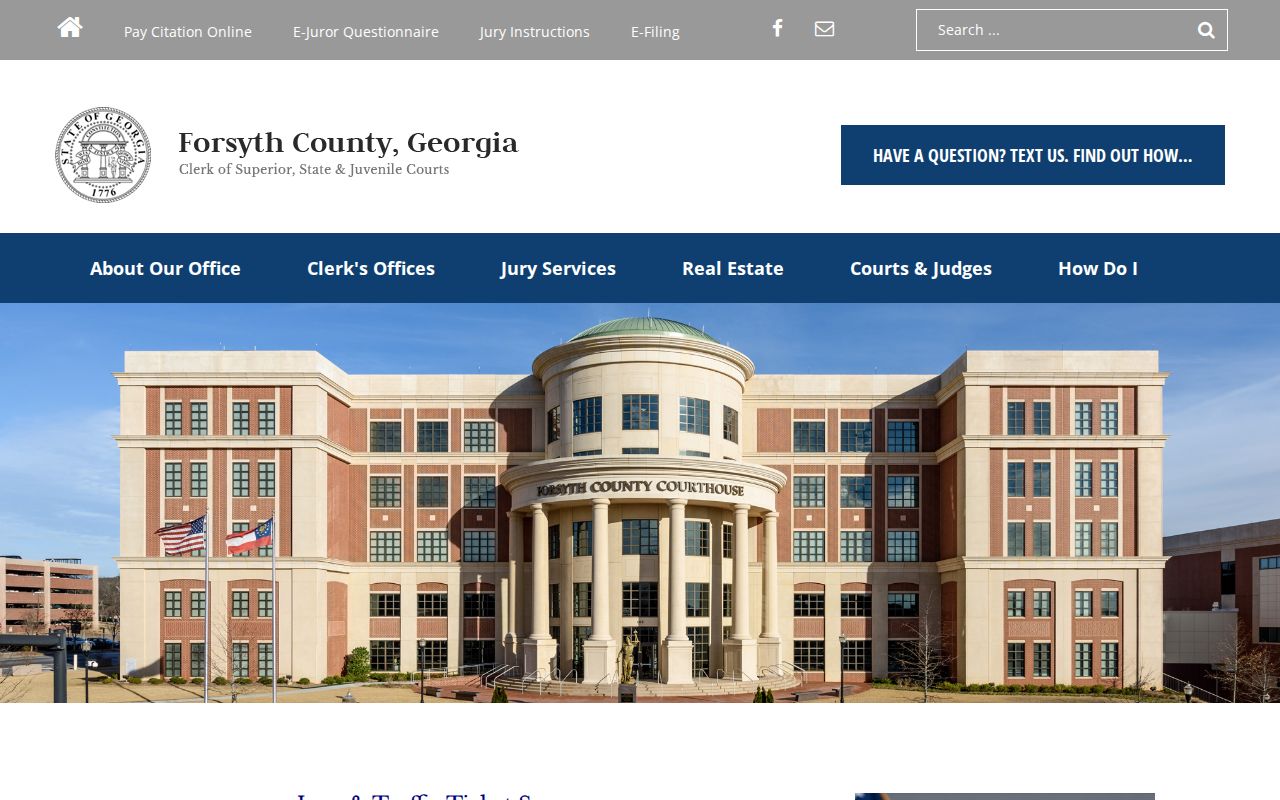
The clerk image reinforces why a filed case paper comes from the courthouse record custodian, not the jail or state prison locator.
Georgia Official Background Checks
The Georgia Bureau of Investigation's Georgia Crime Information Center is the central state repository. For self-review, a person may ask a Georgia sheriff or police agency about obtaining a Georgia history under that agency's rules, or arrange an appointment-only inspection at GCIC headquarters. The published GCIC fee is $10 when usable fingerprints are already available and $25 when headquarters fingerprinting is included. Call 404-244-2639, option 1, before planning a visit; GCIC states that same-day appointments are not available.
Georgia Felon Search is the public name-based felony-conviction product. It costs $15 per query, including a no-record result, and asks for full name, race, sex, and date of birth. Its narrow scope does not make it a complete rap sheet. Authorized fingerprint checks use Georgia Applicant Processing Service through IDEMIA/IdentoGO. Current state material lists $36 for an authorized Georgia-only GAPS check and $49.25 for an authorized Georgia/FBI check, though the service code controls the actual program and price.
| Product | Published cost | Scope |
|---|---|---|
| Georgia Felon Search | $15 per query | Named public felony-conviction product |
| GCIC inspection | $10, or $25 with prints | Personal review and correction |
| GAPS Georgia | $36 listed total | Authorized fingerprint response |
| GAPS Georgia/FBI | $49.25 listed total | Authorized state and federal response |
The GCIC program page identifies the state repository and its functions.
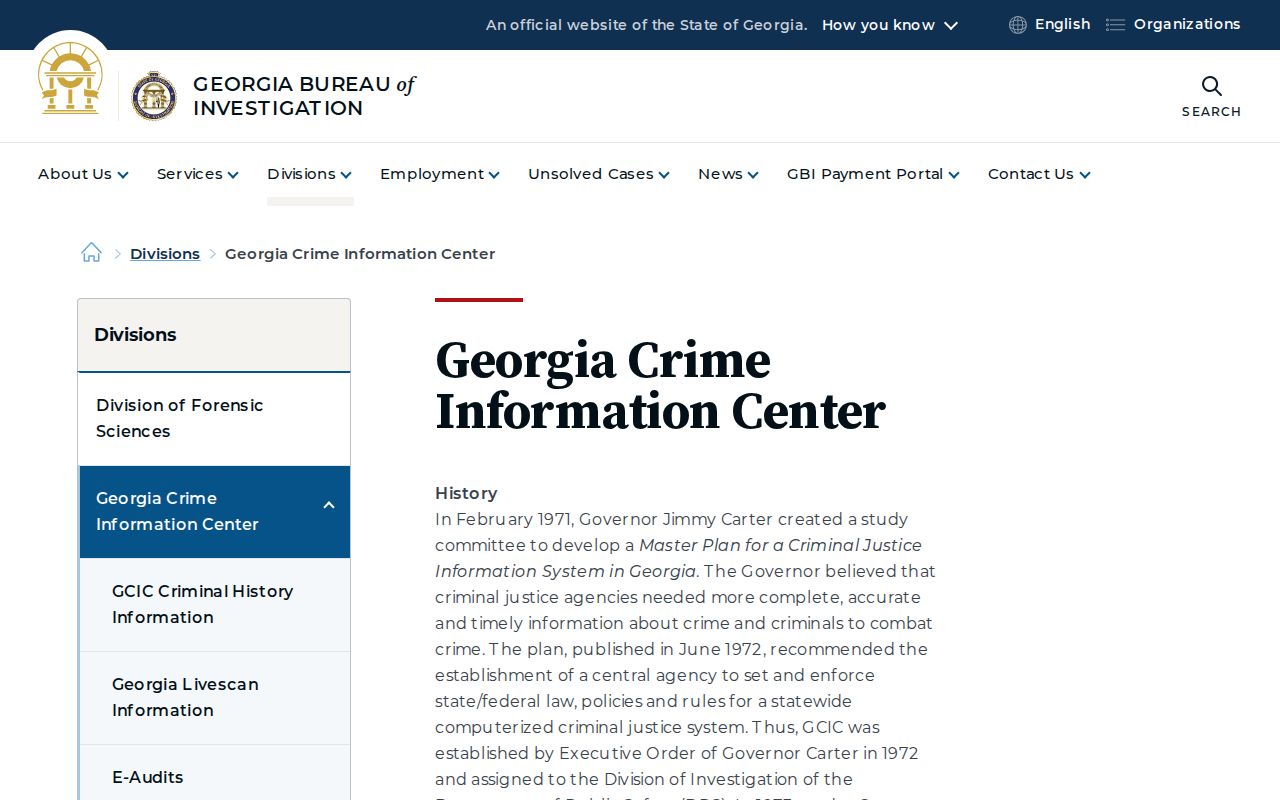
This source separates a state criminal-history product from a Forsyth County court file or local incident report.
Forsyth Searches Beyond Felon Search
Georgia Felon Search can confirm certain felony convictions, but it does not provide nonconviction history, a full court packet, every misdemeanor, or a live county-jail answer. Forsyth County readers should treat a no-record result as a statement about that product, not a guarantee that no court, arrest, municipal, or federal record exists.
The official Georgia Felon Search screen shows the state's public query product.
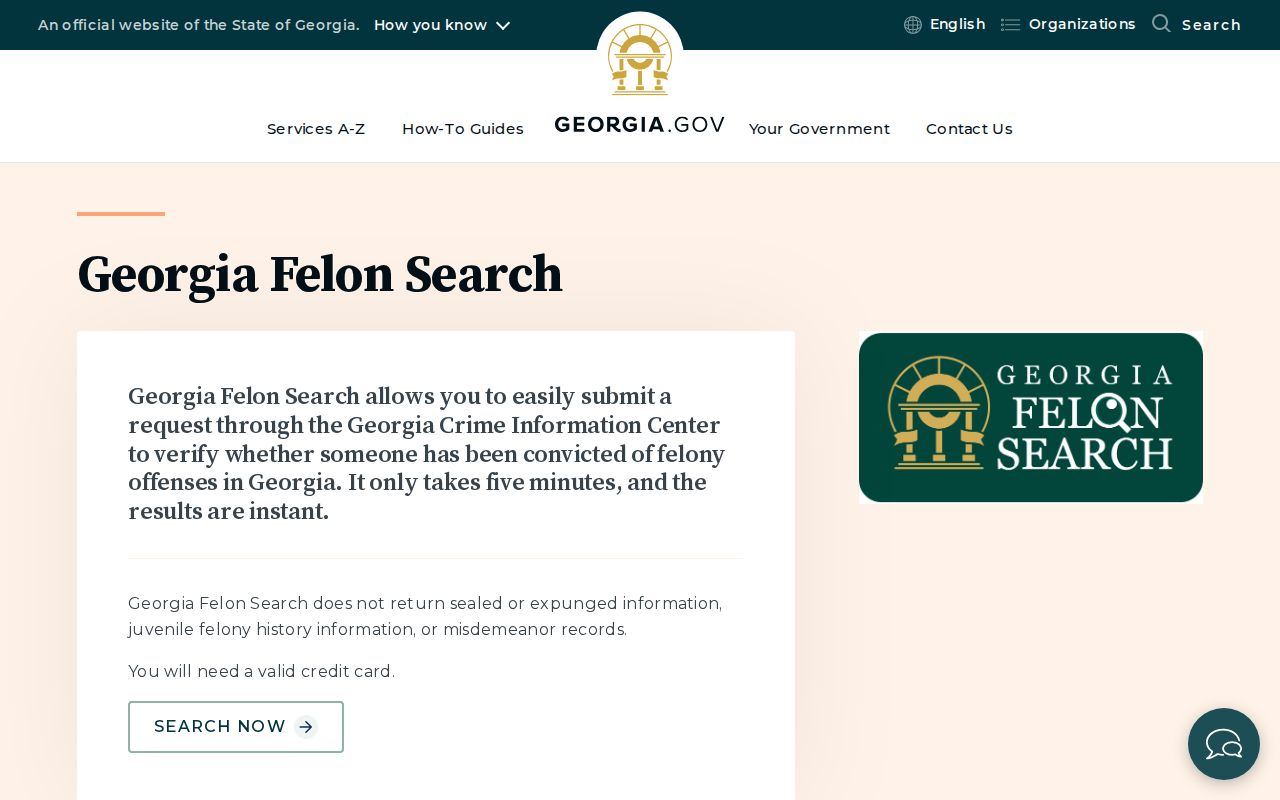
Use the result beside the Forsyth clerk, FCSO, and other official channels instead of stretching it beyond its authorized felony-conviction scope.
Criminal Record Types
Each Forsyth County criminal record follows the work that created it. An officer writes an incident or arrest narrative. Jail staff create the booking entry. A prosecutor or grand jury produces an accusation or indictment, and the court clerk preserves the filed case. Courts and justice agencies later report covered outcomes to GCIC. This chain explains why charges may differ from one record to the next while a case develops.
- Incident and arrest report: the creating law-enforcement agency holds the narrative and supporting material.
- Booking record: FCSO records intake, charge, bond, and custody information for the county jail.
- Court case file: the Forsyth clerk holds public docket entries, filings, judgments, and certified copies.
- GCIC history: the state repository links identification, arrest cycles, reported dispositions, and Georgia custody data.
- Supervision and registry records: DCS, the Parole Board, GDC, GBI, and FCSO each hold a distinct piece.
The Forsyth County Sheriff's Office site is the local source for jail, report, and service channels.
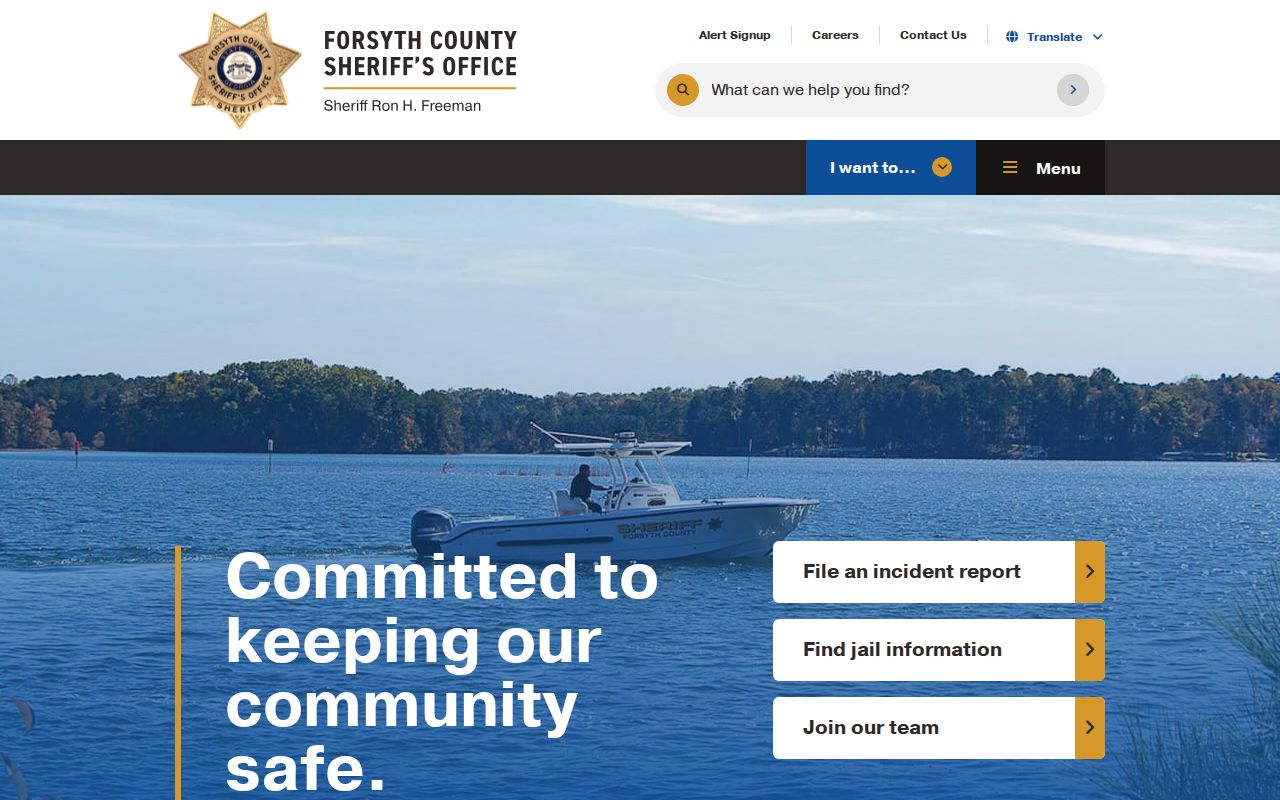
The sheriff source belongs beside, not in place of, the clerk and GCIC sources.
Searching Forsyth Cases in re:SearchGA
Forsyth County retired its older case-search route in favor of re:SearchGA. Registration is required, and online document purchase may carry an added cost. After signing in, select the participating Forsyth location, then use a case number when one is known. A party search works best with first, middle, and last names plus a filing-date range. Case type and date filters can narrow a common name.
| Search field | Format | Use |
|---|---|---|
| Location | Dropdown | Select Forsyth County or the participating court |
| Case number | Text | Strongest case identifier |
| Party name | First, middle, last | Combine fields for a closer match |
| Date filed | From and to dates | Limit the filing period |
| Case type | Dropdown when available | Narrow the selected court |
The re:SearchGA entry page is the clerk-approved online route.
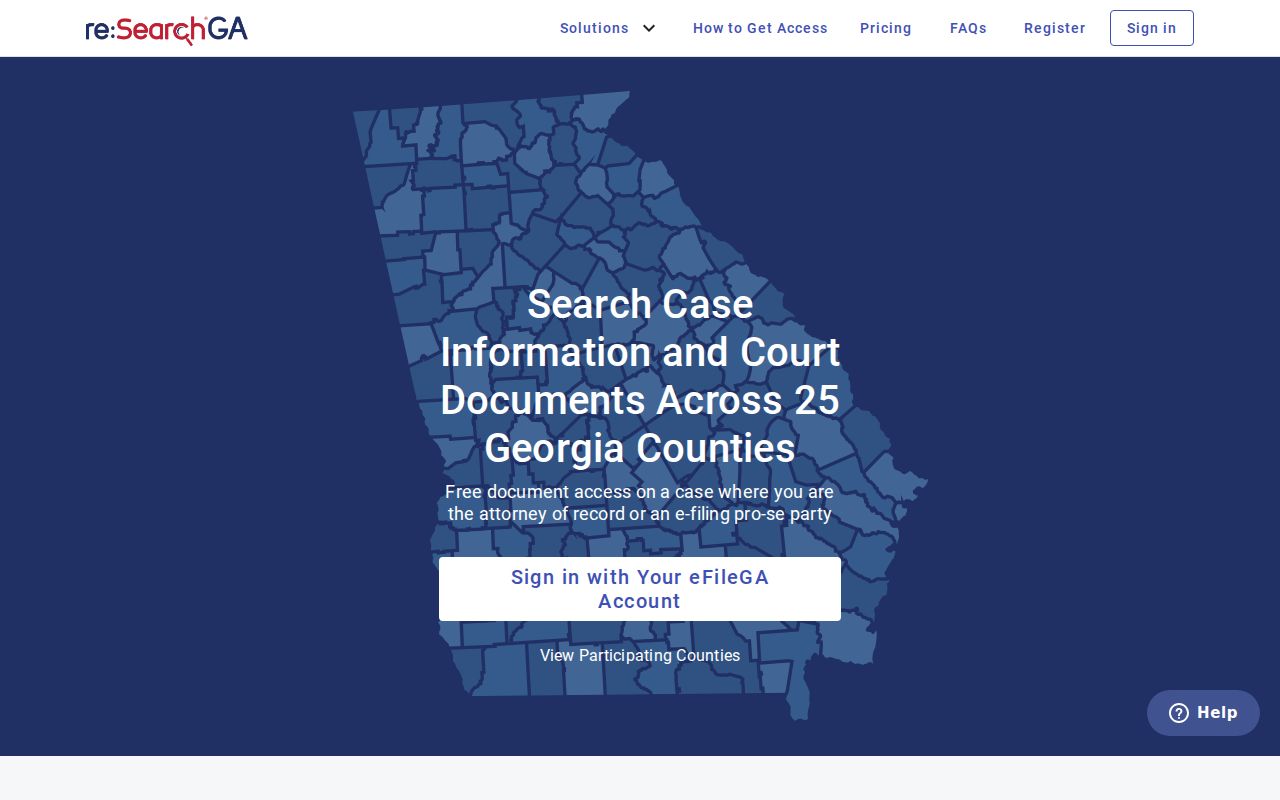
If a scan is absent or the account search fails, the clerk's criminal copy form supports email, mail, and counter requests for identified papers.
Inside a Forsyth County Criminal Record
A public court index shows less personal data than a GCIC history. The court view can show case number, court, filing date, status, parties, charges, docket events, attorney entries, hearings, and a public disposition. GCIC may hold protected identification details, fingerprint-linked arrest information, submitted final outcomes, and Georgia correctional data. Public products omit or redact protected identifiers.
| Name and identifiers | Public name and limited identity aids; GCIC holds a broader protected identification segment. |
|---|---|
| Arrest and booking | Agency, date, intake charge, bond, and custody details can appear in the creating record. |
| Charges and statutes | Alleged offenses may change between arrest, accusation, indictment, and final outcome. |
| Disposition | Dismissal, plea, acquittal, conviction, dead docket, or another court status. |
| Sentence | Public judgment may state custody, probation, fines, and other conditions. |
| Custody or supervision | FCSO, GDC, DCS, and the Parole Board answer different status questions. |
Three Georgia terms matter when reading Forsyth County results:
- Accusation
- A prosecutor's charging document used without a grand-jury indictment where Georgia law permits.
- Disposition
- The recorded result or status of a charge or case.
- Dead docket
- A Georgia status that postpones prosecution indefinitely and is not an acquittal.
- First offender
- A statutory path that may avoid an adjudication of guilt after successful completion.
Forsyth Jail or Georgia Prison
A county-jail search and a state-prison search serve different populations. FCSO P2C lists its Inmates, Recent Arrests, Event Search, and related public functions. When the web entry is unclear, the jail's 24-hour line at 770-781-2226 can address current custody. Georgia VINE offers custody notifications by phone, text, or email, but it is not a criminal-history report.
The GDC Find an Offender portal covers published Georgia correctional information rather than pretrial Forsyth County jail custody.
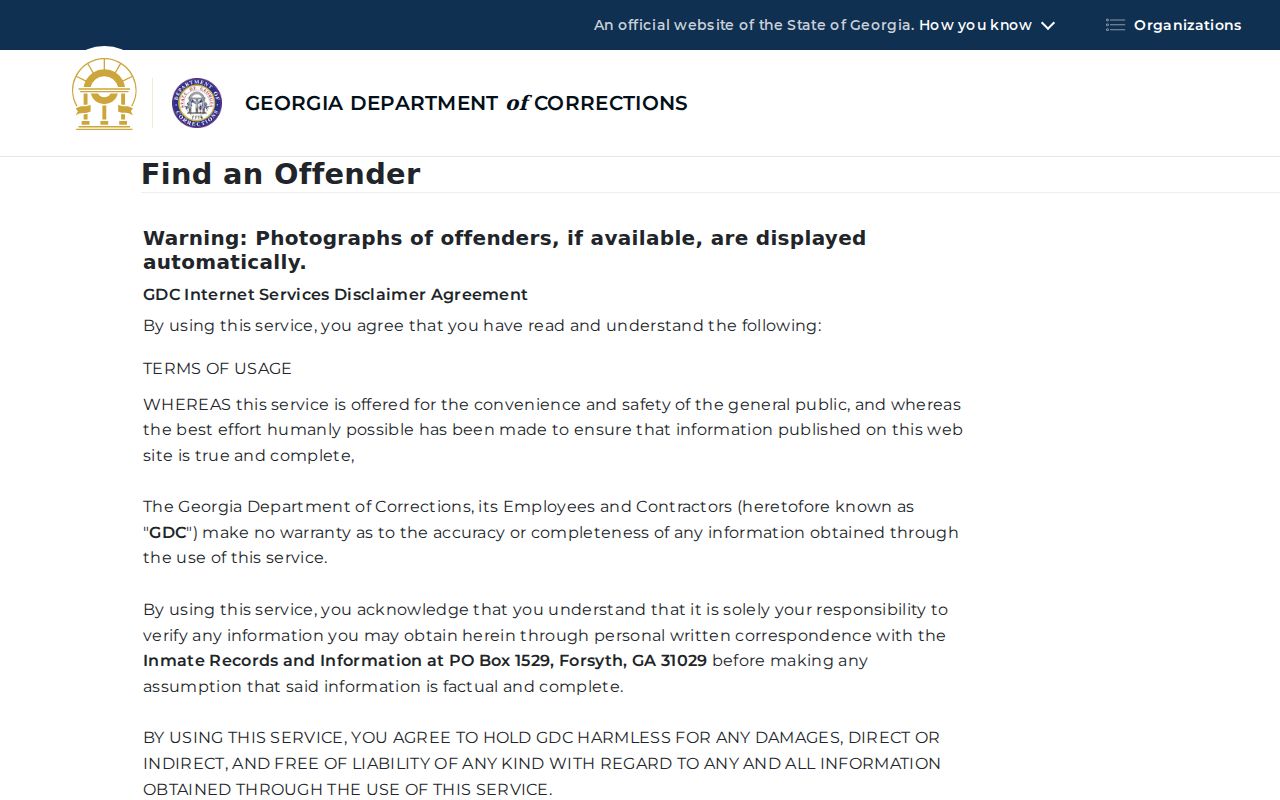
A missing GDC result does not rule out a recent county booking, just as a P2C entry does not establish how the court resolved a charge.
Public Access Laws in Georgia
The Georgia Open Records Act favors access to agency records, but the request must reach the actual custodian. Forsyth County administration handles records for most county departments and the 911 Center. FCSO remains a separate constitutional custodian for its reports, jail material, and law-enforcement records. The clerk controls filed court papers. A response is generally due within three business days, though that rule concerns the response or production status and does not promise full delivery of a large, redaction-heavy file in that span.
Key Georgia laws:
O.C.G.A. § 50-18-70 states Georgia's policy favoring public access, subject to lawful exemptions.
O.C.G.A. § 50-18-71 governs request procedure, timing, reasonable charges, and electronic records.
O.C.G.A. § 50-18-72 lists exemptions and grounds for withholding or redaction.
O.C.G.A. § 35-3-34 controls dissemination from the GCIC criminal-history repository.
O.C.G.A. § 35-3-37 governs eligible record restriction and related court sealing.
The Forsyth County open-records portal provides the county request route.
Choose the department carefully, and use the sheriff's current records instructions when FCSO created the requested material.
Forsyth County Warrant Verification
No complete public FCSO active-warrant database was confirmed. P2C Most Wanted is a selected publication, not a full warrant search. An absent name there cannot clear a warrant concern. Call FCSO nonemergency dispatch at 770-781-3087 or contact the issuing court, review the matching case through the clerk, and use the Records Unit or JustFOIA for releasable information. Cumming Municipal Court is the source for its own bench-warrant questions.
Bench warrants can follow a missed appearance or failure to meet a court condition. Arrest warrants and sealed search warrants may not appear in an open portal. Because a cleared order can take time to update in separate systems, direct confirmation is safer than relying on a search with no result. A person seeking to resolve their own warrant should consider legal advice before appearing.
Sealed, Expunged, and Restricted Records
Georgia calls its main remedy record restriction. Under O.C.G.A. § 35-3-37, eligible arrest-cycle information can be withheld from ordinary noncriminal-justice disclosure after the required review and approval. Arrests after July 1, 2013 generally begin with the prosecutor. For older arrests, the formal request moves from the arresting agency to the prosecutor and then to GCIC, with the current state fee listed as $25.
A missing or wrong outcome should first be corrected by the court that owns the disposition. Restriction is also distinct from sealing. Limiting the GCIC arrest cycle does not by itself remove each filed court paper, so subsection 35-3-37(m) may require a separate request to seal qualifying court records. The District Attorney handles covered felony matters, the Solicitor-General handles State Court cases, and a city prosecutor can be relevant to a municipal matter.
Note: Juvenile files, victim details, account numbers, and court-sealed material can have separate access protections beyond record restriction.
Forsyth Sentences After the Courtroom
The public docket is the best starting point for the sentence the judge imposed. Adult felony probation and parole supervision is carried out by the Georgia Department of Community Supervision, while release decisions belong to the State Board of Pardons and Paroles. A supervision work file can contain protected material and is not the same thing as the public judgment.
The Georgia Department of Community Supervision identifies the agency's statewide role.
When an alleged violation reaches court, the docket may show the motion, hearing, warrant, and judicial result, but an old probation sentence alone does not prove a current violation.
Forsyth County Criminal Records by City
Cumming is Forsyth County's only incorporated municipality, so the city list does not pad itself with unincorporated communities. That distinction matters. A Cumming postal address may fall outside city limits and under FCSO jurisdiction. Within the city, Cumming Police keeps its own incident and crash records, Cumming Municipal Court keeps qualifying ordinance and traffic matters, and county jail records remain with the sheriff when a city arrest leads to booking there.
Cumming Criminal Records
10,175 residents in the cited July 2024 estimate · City police and municipal court channels
Forsyth County's Federal Record Layer
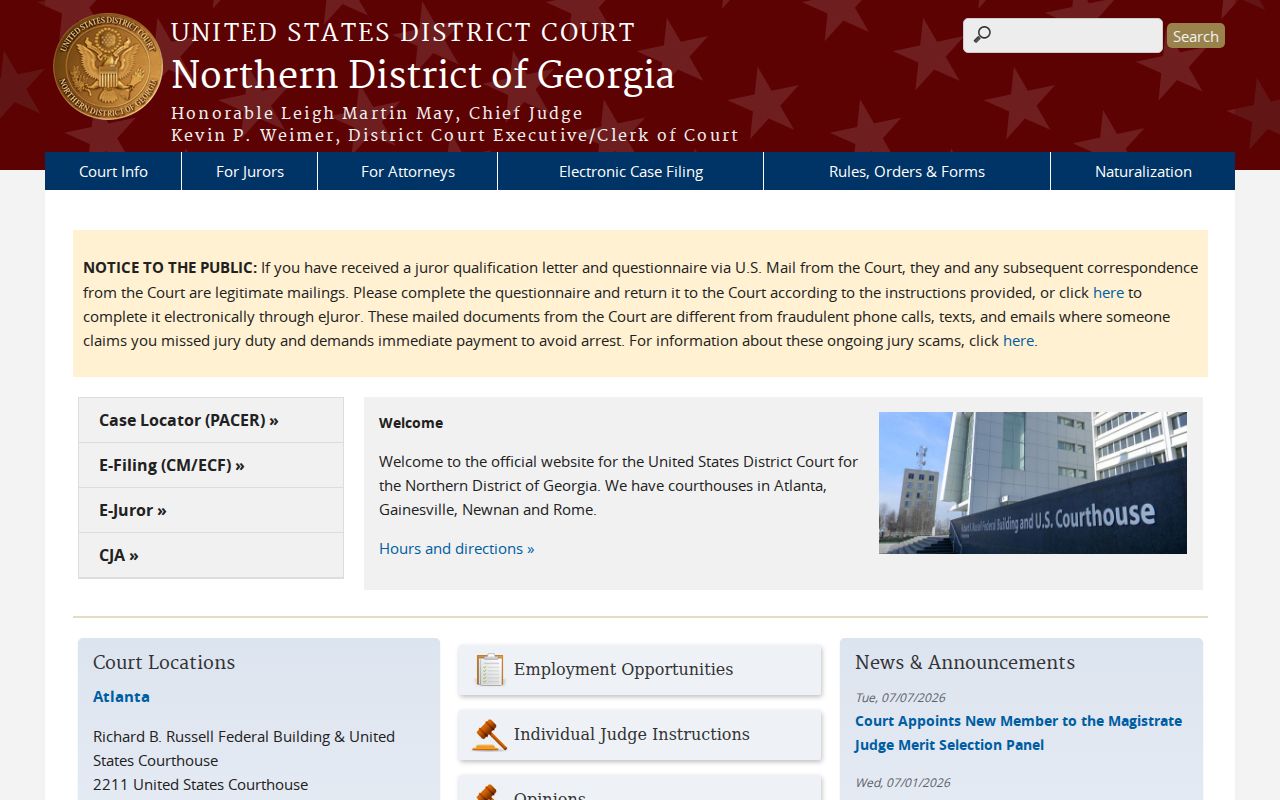
Federal criminal cases do not appear as Forsyth County clerk files. The U.S. District Court for the Northern District of Georgia covers the county, and PACER is the official account-based federal docket system. PACER can provide docket sheets and public filings, subject to sealing, redaction, and the current federal fee rules. An FBI Identity History Summary is another distinct product: it is the subject's own fingerprint-based FBI record, not a local court packet.
The Northern District of Georgia website identifies the federal trial court serving Forsyth County.
Federal custody uses the Bureau of Prisons locator, although a person in a new federal matter can first be held in a contracted or local facility.